Feed and rotor
Record fruit preparation and feed stability. Rotor action and clearance must be assessed with actual seed integrity, not chosen only for a higher recovered mass.
Related equipment duty →GUAVA / PROJECT KNOWLEDGE
Explore feed and rotor, screen and pulp outlet, and the separate seed/skin residue path in a conceptual guava pulper.
The illustration below is an engineering explanation, not a supplied model drawing. It shows why the recovered pulp and the retained seed/skin stream both need attention during a trial.
A wetter residue can indicate retained useful pulp, while a more aggressive setting can change seed damage or fibre passage. Assess matched samples and total measured streams before drawing a conclusion.
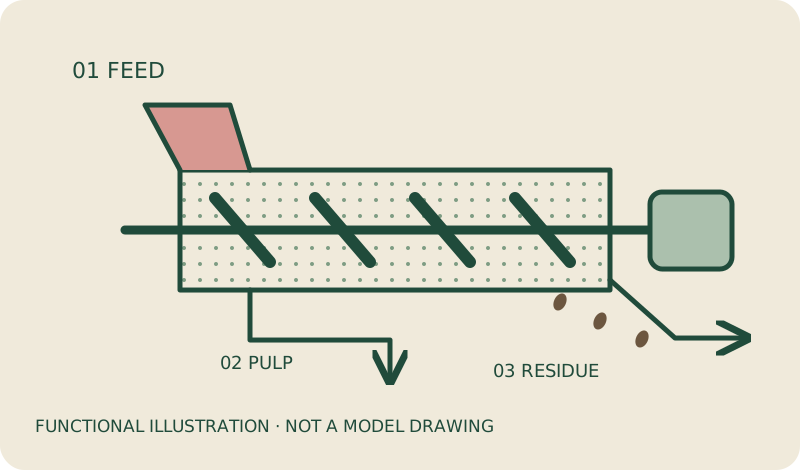
Record fruit preparation and feed stability. Rotor action and clearance must be assessed with actual seed integrity, not chosen only for a higher recovered mass.
Related equipment duty →Recovered pulp passes the screen into a separate path. Record aperture and condition, then assess the product using the agreed seed/fibre method. Screen size alone does not describe all particles.
Related equipment duty →Retained seeds, skin and coarse fibre need an independent discharge. Sample this stream, check seed damage and identify useful pulp carried out with it.
Related equipment duty →DEFINE YOUR GUAVA PROJECT