EQUIPMENT SELECTION GUIDE
When to Use Vacuum Deaeration for Guava Pulp
Assess entrained air, foaming, pulp viscosity, feed temperature and closed transfer before adding a vacuum deaerator to a guava process.
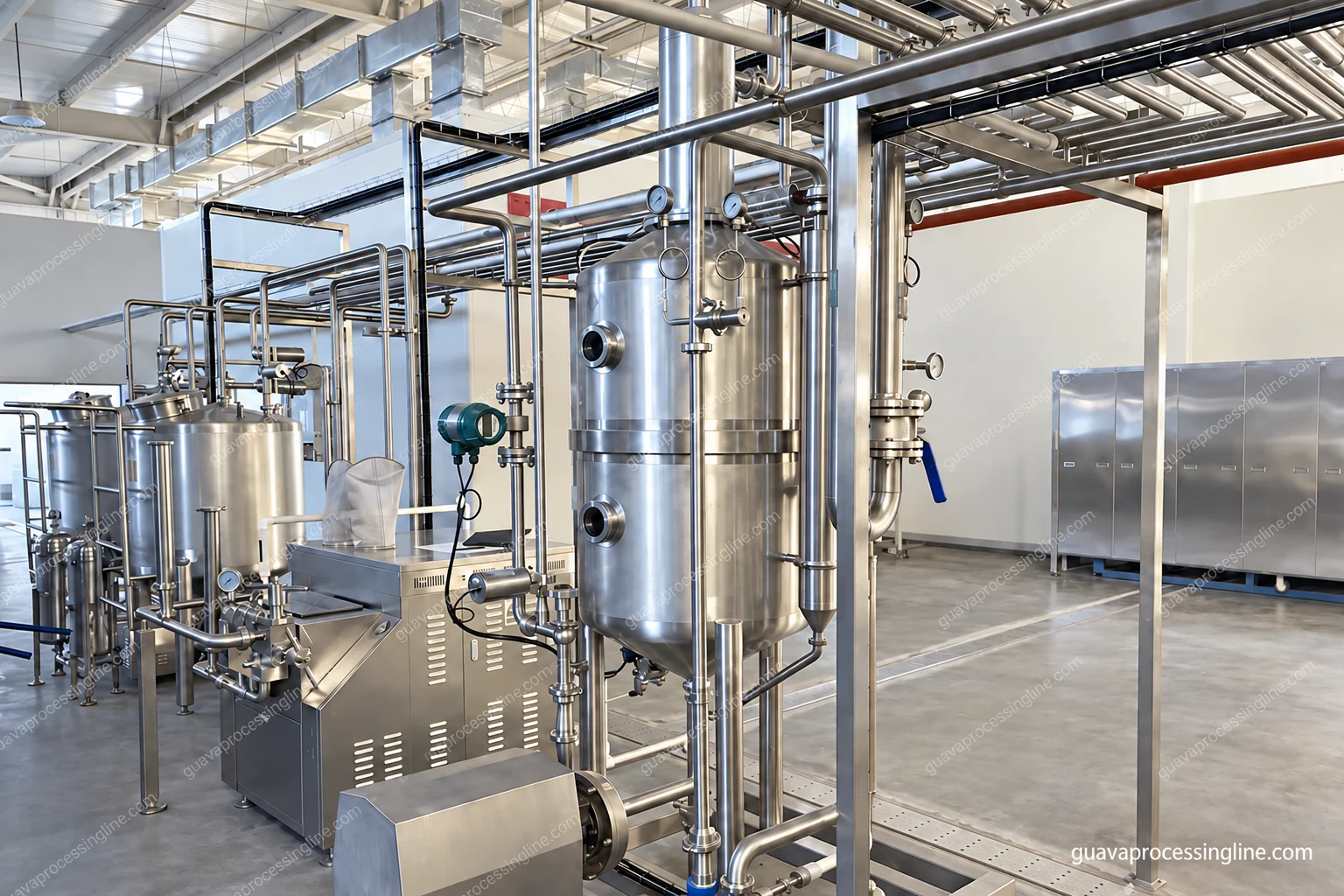
Identify the air-removal duty
A vacuum vessel lets gas disengage under reduced pressure. Feed distribution, temperature and residence behaviour influence the result. Define the observed aeration problem and product condition before making deaeration part of a proposal.
Consider fibre, viscosity and foam
A viscous guava pulp may spread and release bubbles differently from a formulated base. Assess foaming and product carry-over as well as vacuum service requirements. The selection should be based on the actual product range.
Keep onward transfer closed
Poor seals, an open handover or an uncontrolled return can introduce air again. Coordinate outlet transfer and the next module inlet with the deaerator working condition. Its position is chosen with the thermal and formulation sequence.
Make the vessel serviceable
Include product drainage, seal inspection, vacuum-side protection and the cleaning route. Provide planned flow, temperature and available product observations when asking whether a vacuum stage is appropriate.
LET’S DEFINE YOUR EQUIPMENT SCOPE
What are you planning
to process?
Share your fruit or pulp, target product and planned quantity. We can start with a short brief.